
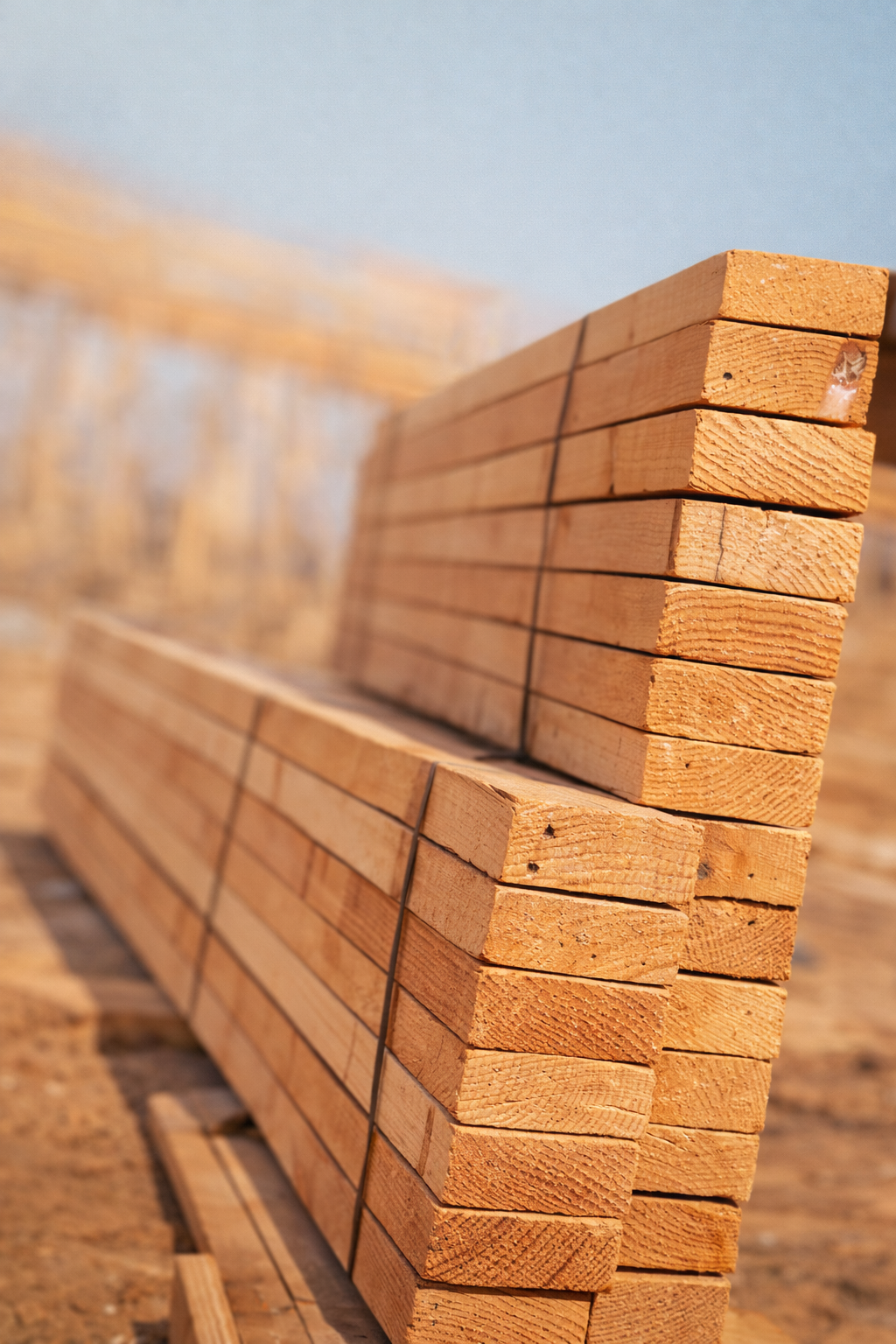
How to Choose Lumber Without Getting Burned at Big Stores
A Straight-Talking Guide From 40 Years Around Wood
Buying lumber should be simple. You need boards, you go to the store, you pick what looks decent, and you head home. That’s how most beginners think it works.
In reality, lumber is where more woodworking projects fail than anywhere else. Warped boards, hidden moisture, poor grain, and bad cuts can ruin even good workmanship.
I’ve bought plenty of bad lumber over the years—especially early on. Some of it twisted overnight. Some cracked after assembly. Some looked fine until it was too late.
Here’s how I choose lumber now, and how you can avoid the most common traps—especially at big box stores.
Understand What Big Stores Are Really Selling
Big home improvement stores are convenient, but their lumber is not selected with fine woodworking in mind.
Most of it is:
- Stored in open racks
- Exposed to changing humidity
- Cut quickly, not carefully
- Handled roughly during shipping
That doesn’t mean you can’t find usable boards there. It means you have to be selective.
Never assume a stack is good just because it’s new or neatly arranged.
Always Check for Straightness First
Before you look at grain or color, check if the board is straight.
Hold one end at eye level and look down the length. You’re checking for:
- Bowing (curving along the face)
- Twisting (corners not in the same plane)
- Cupping (edges higher than the center)
If a board isn’t straight in the store, it won’t magically straighten itself at home.
Put it back.
Grain Tells You How the Wood Will Behave
Grain isn’t just about looks—it tells you how the board will move over time.
Look for:
- Straight, even grain for stability
- Avoid wild grain if you’re a beginner
- Tight growth rings usually mean denser wood
Boards with uneven grain often twist or cup as they dry further. They may look interesting, but they cause problems if you don’t know how to work with them.
Watch Out for Moisture (The Silent Problem)
One of the biggest issues with big-store lumber is moisture.
Even kiln-dried boards can still carry extra moisture from storage conditions. Wood that’s too wet will:
- Shrink after your project is built
- Pull joints apart
- Crack or warp unexpectedly
If you can, let lumber sit in your shop for a few days before using it. This allows it to adjust to your environment.
Rushing this step causes more regret than most people realize.
Don’t Judge Boards by Color Alone
A common beginner mistake is choosing boards based only on color.
Color evens out over time. Structure does not.
Focus on:
- Straightness
- Grain
- Lack of deep knots in critical areas
Small surface knots can be fine. Structural knots in load-bearing parts are trouble.
Know When to Walk Away
Some days, the lumber just isn’t good.
That’s hard to accept when you’ve already made the trip, but forcing bad wood into a project usually leads to wasted time and frustration.
If nothing looks right, leave empty-handed. I’ve done it more times than I can count.
Good woodworking starts with good material.
Local Lumber Yards Are Worth the Effort
If you have access to a local lumber yard, use it.
You’ll often find:
- Better-dried lumber
- Wider and thicker boards
- Knowledgeable staff
- More consistent quality
You may pay a little more, but you’ll waste far less.
For furniture or important projects, it’s almost always worth it.
A Simple Rule I Follow to This Day
Before I buy any board, I ask myself one question:
“Would I be annoyed if this board ruined my project?”
If the answer is yes, I don’t buy it.
That rule has saved me a lot of time and money.
Final Thoughts From the Shop
Woodworking doesn’t start at the bench—it starts at the lumber rack.
Choose carefully. Take your time. Learn to read the wood before you cut it.
Good lumber makes everything easier. Bad lumber makes everything harder.
That lesson never changes.

Privacy Policy | Terms of Service | Earnings Disclaimer | DMCA
Copyright © 2026 bensbackyardshop.com | All Rights Reserved.
This site is not a part of the Facebook website or Facebook Inc. Additionally, this site is NOT endorsed by Facebook in any way. FACEBOOK is a trademark of META, Inc.