
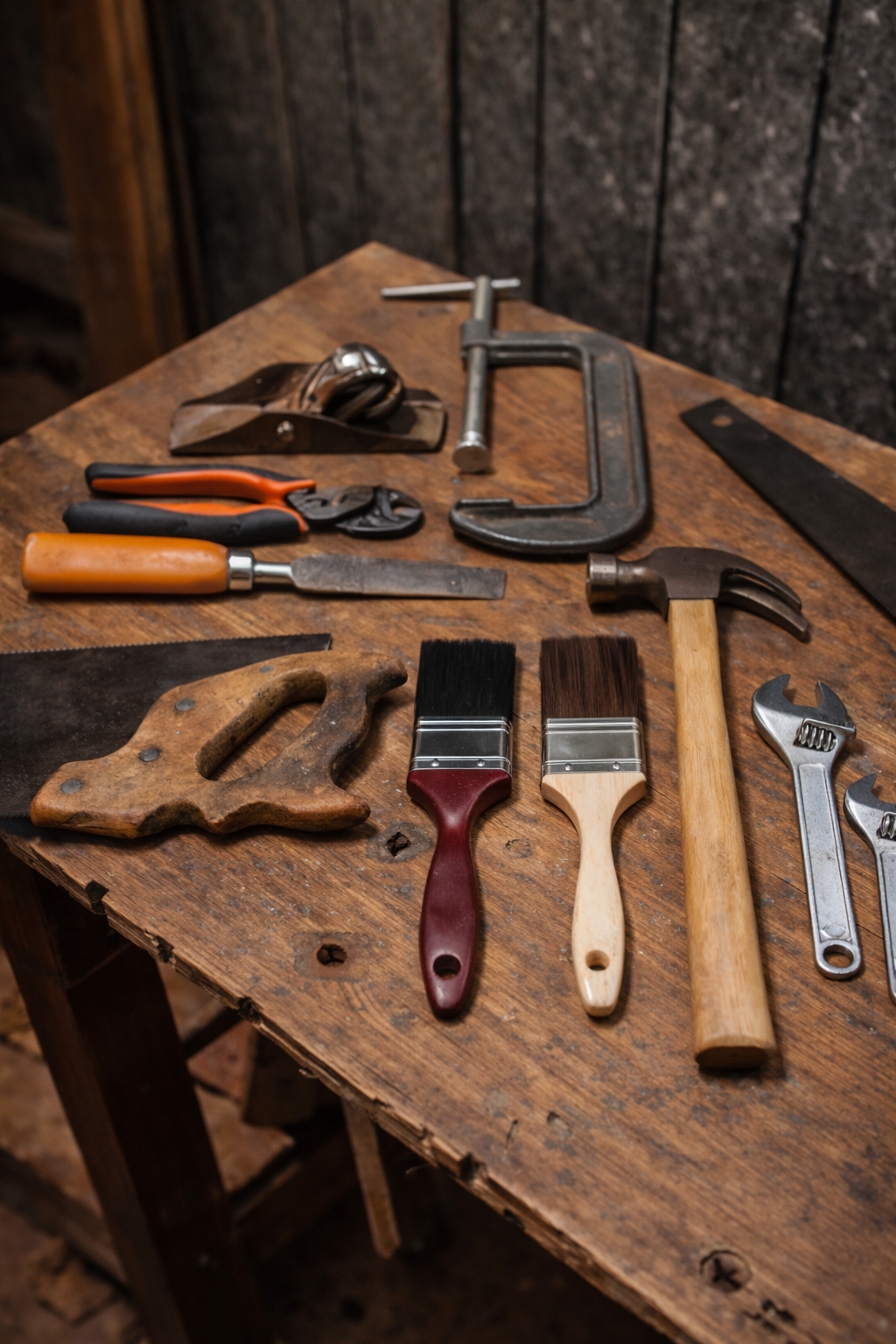
Woodworking Tools I Regret Buying
Hard Lessons From Over 40 Years in the Shop
If there’s one thing woodworking teaches you besides patience, it’s humility. Every woodworker I know—myself included—has bought tools they thought they needed, only to realize later they were a waste of money, space, or both.
Some of these tools looked impressive. Some were heavily advertised. A few were even recommended by well-meaning people who didn’t actually use them much.
This isn’t a list meant to embarrass anyone. It’s meant to save you time, money, and frustration by sharing mistakes I’ve already paid for.
Buying Tools Before You Need Them
The biggest mistake isn’t a specific tool—it’s buying tools without a real problem to solve.
Early on, I bought tools thinking, “I’ll need this someday.” Many of them sat unused for years. Some never earned their keep at all.
If a tool doesn’t help you complete a project you’re working on right now, it can usually wait.
Cheap Multi-Purpose Tools That Do Nothing Well
Tools that claim to do five or six jobs often do none of them properly.
- Lack precision
- Feel awkward in the hand
- Wear out quickly
I’ve replaced more of these than I care to count. In the long run, one solid, single-purpose tool is almost always the better choice.
Low-Quality Power Tools Bought “Just to Get By”
I’ve bought inexpensive power tools thinking they’d be good enough for light use. Most of them weren’t.
- Weak motors
- Poor alignment
- Excessive vibration
- Inconsistent results
A bad power tool doesn’t just slow you down—it can ruin good wood and make woodworking feel harder than it should.
If you can’t afford a quality version yet, it’s often better to wait.
Specialty Jigs That Look Smarter Than They Are
Some jigs are incredibly useful. Others look clever but spend their lives on a shelf.
- They take longer to set up than working by hand
- They only work on very specific projects
- They don’t adapt when plans change
Many problems are better solved with a square, a sharp tool, and a little practice.
Tools Bought Because “Everyone Has One”
This is a quiet trap.
What works for one woodworker doesn’t always work for another. Some tools make sense in production shops but not in small home workshops.
A tool should earn its place in your shop—not someone else’s.
Cheap Measuring and Marking Tools
If there’s one area where cheap tools cause real trouble, it’s measuring and marking.
Inaccurate squares and layout tools lead to wasted wood, poor fits, and endless frustration.
You don’t need many measuring tools—but the ones you have should be accurate and dependable.
Tools That Replace Skill Instead of Teaching It
Some tools promise shortcuts without learning fundamentals.
- They limit flexibility
- They hide mistakes instead of teaching
- They become useless as projects grow
Learning basic hand skills early pays off for a lifetime.
What I’ve Learned the Hard Way
Looking back, the tools I regret most weren’t always cheap or poorly made. They were unnecessary at the time I bought them.
- What problem does this solve?
- Can I already do this another way?
- Will I use this more than once or twice a year?
If the answers aren’t clear, I walk away.
Final Thoughts From the Shop
Every woodworker makes mistakes with tools. It’s part of the journey.
Buy fewer tools. Learn them well. Let your projects guide your purchases—not marketing or impulse.

Privacy Policy | Terms of Service | Earnings Disclaimer | DMCA
Copyright © 2026 bensbackyardshop.com | All Rights Reserved.
This site is not a part of the Facebook website or Facebook Inc. Additionally, this site is NOT endorsed by Facebook in any way. FACEBOOK is a trademark of META, Inc.