
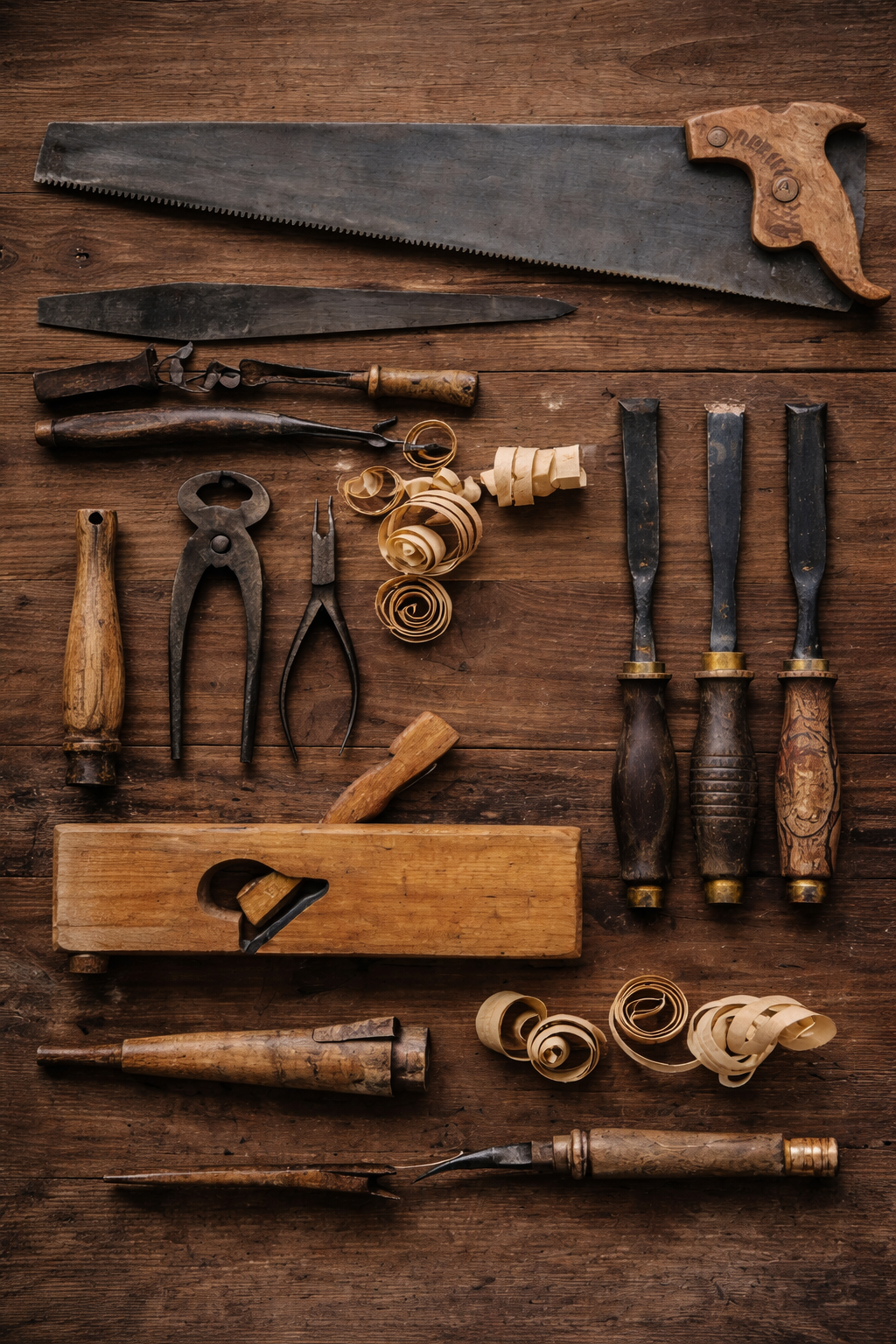
The Only Woodworking Tools You Actually Need
A Straightforward Guide From a Woodworker With 40 Years in the Shop
Woodworking has a way of pulling people in. It starts simple—maybe a small project, maybe a repair around the house—and before long you’re staring at catalogs and tool aisles wondering what you actually need to get started.
After more than four decades of working with wood, I can tell you this plainly: most beginners buy far more tools than they need, and still don’t buy the right ones.
You don’t need a full workshop. You don’t need the newest gadgets. You need a small set of reliable tools that do real work and teach you good habits.
This guide focuses on the woodworking tools you actually need—nothing more.
Start With Tools That Shape and Fit Wood
Tools earn their place by touching the wood. If a tool doesn’t cut, shape, or help fit pieces together accurately, it can wait.
Chisels: Fewer Tools, Better Results
A good chisel does more work than most people realize. You don’t need a full rack of sizes when you’re starting out.
What you actually need:
- ¼ inch chisel
- ½ inch chisel
- 1 inch chisel
Sharp matters more than brand. A well-sharpened chisel will outperform an expensive dull one every time. Learn to maintain your edge and your chisels will serve you for decades.
Clamps: You Will Never Own Enough
Every woodworker learns this lesson eventually.
Glue doesn’t wait. Wood moves. And without clamps, frustration follows.
You don’t need fancy clamps. Simple bar clamps or pipe clamps work just fine. Buy them as you find them. Used clamps are often a safe purchase, and they age well.
If there’s one tool you should always keep adding to your shop, it’s clamps.
Squares: Accuracy Starts Here
Woodworking problems often come down to one thing: things aren’t square.
At minimum, you’ll want:
- A solid framing or carpenter’s square
- A smaller square for furniture and detail work
A combination square is one of the most useful tools you can own. It helps with marking, checking angles, and setting measurements accurately. Mine stays within arm’s reach almost all the time.
Drills: Keep It Simple and Reliable
A drill is hard to avoid, and you don’t need much to make it useful.
Corded drills are dependable and affordable. Cordless drills are convenient, as long as the batteries can keep up. Either is fine.
Look for:
- Variable speed
- Reverse function
- Comfortable grip
Spend a little extra on decent drill bits. Cheap bits wander, burn wood, and cause headaches.
Hand Planes: Old Tools Still Matter
A hand plane can fix problems sanding never will.
A block plane is the best place to start. It’s useful for trimming, fitting, and cleaning edges. One good plane can quietly become one of your most-used tools.
Many older planes outperform new ones. If you find a solid used plane, don’t pass it up.
Basic Shop Tools You’ll Always Use
These don’t need much explanation, but you’ll use them constantly:
- Tape measure
- Hammer
- Screwdrivers
- Wrenches
- Sandpaper
- Safety glasses
They aren’t exciting, but they keep projects moving forward.
Buying Woodworking Tools the Right Way
One of the biggest mistakes beginners make is buying cheap tools just to fill a shop.
Cheap tools cost more in the long run. They wear out, break, and make woodworking harder than it needs to be.
That doesn’t mean everything must be new. Some of the best tools I own came from:
- Yard sales
- Flea markets
- Auctions
Hand tools are usually safe used purchases. Power tools deserve more caution—test them, inspect them, and walk away if something doesn’t feel right.
Tools You Don’t Need Yet
You don’t need:
- Every jig on the market
- A full wall of power tools
- The most expensive brand names
Woodworking rewards patience. Buy tools when you actually need them for a project. Let your skills guide your purchases, not advertisements.
Final Thoughts From the Shop
After all these years, the tools I trust most aren’t flashy. They’re the ones that work when I pick them up and do what they’re supposed to do without complaint.
Start small. Learn your tools well. Build slowly. The rest will come with time.

Privacy Policy | Terms of Service | Earnings Disclaimer | DMCA
Copyright © 2026 bensbackyardshop.com | All Rights Reserved.
This site is not a part of the Facebook website or Facebook Inc. Additionally, this site is NOT endorsed by Facebook in any way. FACEBOOK is a trademark of META, Inc.